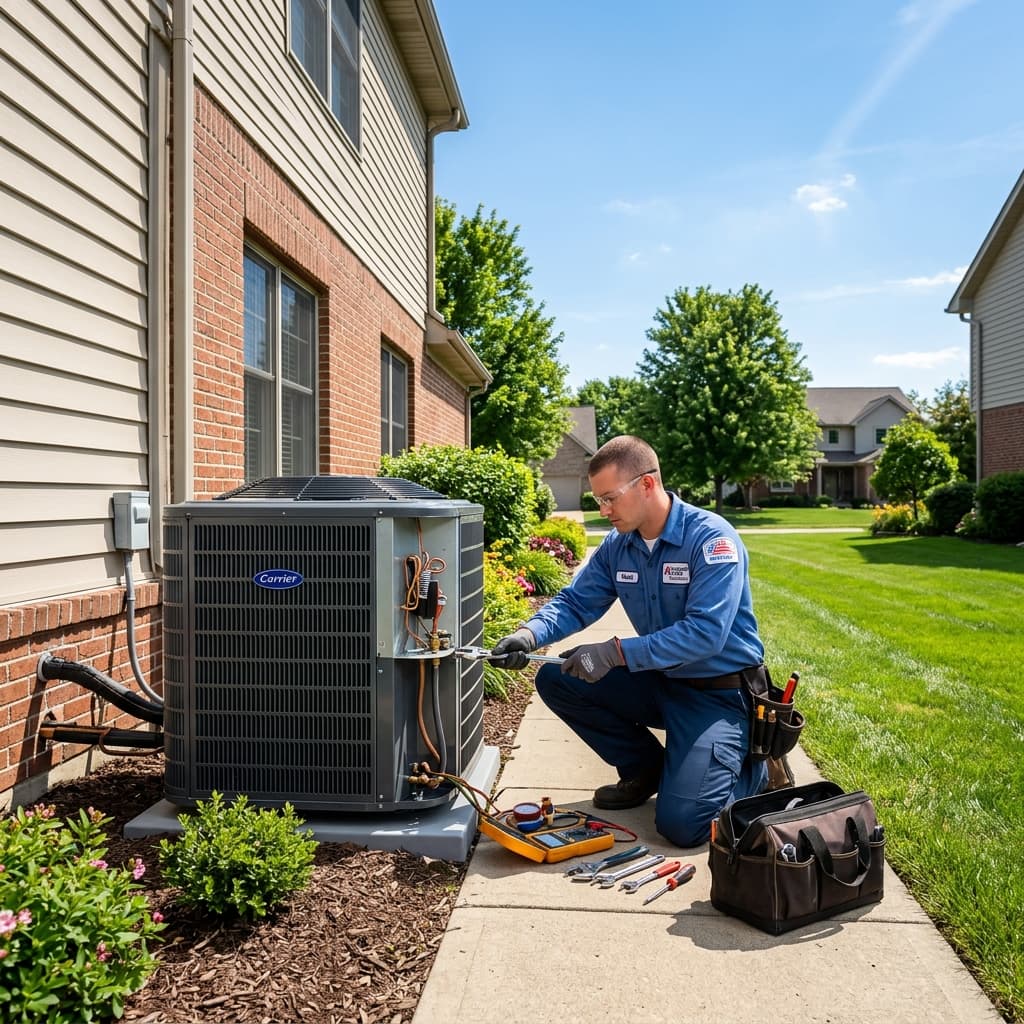
Seasonal Heating Maintenance in Kingsland, Austin & the Hill Country
The best time to find out your heater doesn't work is not when it drops below freezing at midnight. O2 Kool's fall tune-up is designed to catch every potential failure — and every safety concern — before cold weather arrives. Schedule in October or November before peak demand.
When should I schedule heating maintenance in Kingsland, Texas?
Schedule seasonal heating maintenance once a year in fall — ideally October or early November — before the first cold snap. Even in mild Hill Country winters, annual tune-ups are critical because they catch safety issues (cracked heat exchangers, carbon monoxide risk, blocked flues) that cannot be diagnosed any other way. O2 Kool's 20-point fall tune-up includes combustion analysis, CO safety testing, heat exchanger inspection, and complete electrical and mechanical service on gas and electric furnaces, heat pumps, and packaged HVAC units.
Why a Fall Heating Tune-Up Is Worth the Call
In the Hill Country, heating systems sit idle for most of the year — and that downtime is part of the problem. Dust collects on burners and flame sensors. Rodents nest in flue pipes. Moisture corrodes electrical contacts. Gaskets dry out. A component that was fine in March may well fail on the first cold night in November.
A fall tune-up is designed to find every one of those issues before they strand you without heat — and, more importantly, to catch safety problems that can't be detected any other way. Cracked heat exchangers, blocked flues, and failed pressure switches don't announce themselves until someone gets hurt.
Our technicians use combustion analyzers, manometers, and CO monitors on every gas system we service. That's the difference between a real tune-up and a visual inspection.
Safety First
A fall tune-up catches cracked heat exchangers, blocked flues, bad pressure switches, and rollout risks — problems that can cause carbon monoxide exposure or fire.
Lower Gas & Electric Bills
Dirty burners, wrong gas pressure, and a drifting temperature rise all force the furnace to run longer and burn more fuel for the same heat. A tune-up restores factory performance.
Fewer Mid-Winter Breakdowns
Most emergency heating calls in January are for failures that were visible in October — weak igniters, dirty flame sensors, tired capacitors. We catch them before the cold hits.
Warranty Compliance
Most manufacturer warranties require documented annual maintenance by a licensed HVAC contractor. Skip the tune-up and a later claim may not be honored.
The O2 Kool 20-Point Heating Tune-Up Checklist
Every box gets checked on every visit. Nothing skipped, nothing rushed.
When to Schedule Heating Maintenance
October — The Ideal Window
Before the first cold snap, after peak AC season has passed. We can schedule around your calendar, and if something needs repair you have time to order parts before temperatures drop.
November — Good Backup Timing
If October fills up, November still works. Weather is usually mild, demand is manageable, and a fall tune-up prevents the January emergency call that otherwise ruins a holiday week.
January or February — Emergency Rescue",
Not ideal, but better than nothing. If the system hasn't been serviced in years, we can still perform a full inspection — though if failures are found during peak heating season, repairs usually take priority over preventive work.
CO Safety Is the Real Reason You Need Fall Maintenance
Carbon monoxide is colorless and odorless. The only way to know whether your furnace is producing it safely is to measure — which is what combustion analysis does. Homeowners who skip annual service are essentially trusting their safety to guesswork.
Every O2 Kool fall tune-up includes combustion analysis and CO safety testing on gas equipment. No exceptions.
CO Safety Basics:
- Install CO detectors on every level of the home
- Test and change CO detector batteries twice a year
- Never warm a vehicle in an attached garage
- Never use an oven, grill, or unvented heater to warm the home
- Schedule annual combustion analysis on every gas appliance
- Leave immediately if a CO alarm sounds — call us and 911
Signs Your Heater Needs Maintenance Now
- Higher gas or electric bills than the same months last year
- Heater runs longer than it used to without reaching setpoint
- Dust around supply registers or the indoor unit
- Yellow or orange flame on a gas furnace (should be blue)
- Burning smell every time the heater kicks on
- Heater cycles on and off more frequently than before
- System never had a professional tune-up (or not in the past year)
- Carbon monoxide detector alarm or sensitivity
Between Tune-Ups: What You Can Do
- Change the air filter every 30–60 days during heating season
- Keep registers and returns clear of furniture, rugs, and drapes
- Test CO and smoke detectors monthly — replace batteries twice a year
- Clear leaves and debris away from the outdoor heat pump (if equipped)
- Listen for new sounds or smells — report anything unusual
- Keep the thermostat setpoint steady — avoid big swings
Seasonal Heating Maintenance Across Central Texas
Seasonal Maintenance — Frequently Asked Questions
How often should heating systems be serviced in Central Texas?
Once a year, ideally in fall (October or November) before the first cold snap. Even though Kingsland, Austin, and the Hill Country have milder winters than northern climates, heating systems still need annual safety and performance checks. Skipping maintenance risks carbon monoxide exposure, unexpected failures in cold weather, and voided warranties.
What does a seasonal heating tune-up include?
O2 Kool's tune-up is a 20-point inspection covering every component that affects safety, efficiency, and reliability. That includes heat exchanger inspection, burner cleaning, combustion analysis, CO safety testing, flue inspection, blower service, filter replacement, thermostat calibration, electrical check, and a written report. Nothing skipped, nothing rushed.
Why is combustion analysis important?
A combustion analyzer measures exactly how cleanly and completely your gas furnace is burning fuel. It detects incomplete combustion (CO production), wrong gas pressure, and efficiency drift — problems invisible to the naked eye. Skipping this test means a tune-up is really just a visual inspection, which misses the most important safety checks.
Can I skip heater maintenance in a mild winter?
Not advisable. Even in a mild Central Texas winter, the furnace is running — and the problems that annual maintenance catches (cracked heat exchangers, blocked flues, degraded safety controls) are safety issues, not comfort issues. Skipping service also voids most manufacturer warranties.
Do you offer heating maintenance plans?
Yes — call us to discuss current plan options. Maintenance agreements typically include priority scheduling, discounted repair pricing, documented service records, and both spring AC and fall heating tune-ups in one plan. Call (325) 388-5665 for details.
How long does a heating tune-up take?
A thorough seasonal maintenance visit usually takes 60–90 minutes per system. If we find problems that need repair, we quote those separately before any additional work — you approve each repair.
Schedule Your Fall Heating Tune-Up
Call O2 Kool Refrigeration & AC — keeping homes across Kingsland, Austin, and the Texas Hill Country safe and warm through winter.
Heating maintenance — authoritative guidance
These references cover heating efficiency, carbon monoxide safety, and the value of annual professional maintenance.
- U.S. Department of Energy: Maintaining your heating system
Federal guidance on annual heating maintenance and efficiency.
- CDC: Carbon monoxide safety
Why combustion analysis matters and what to do if CO exposure is suspected.
- NFPA: Home heating safety
Fire and safety considerations for all home heating equipment.
- ENERGY STAR: Heating & cooling efficiency
How maintenance, filters, and smart thermostats compound into savings.